What to Combine Coenzyme Q10 With
Coenzyme Q10 is rarely taken on its own: it is added to multivitamins, "heart" complexes, and sports stacks. But do these combinations reinforce one another, or do they simply raise the price of the bottle? The editorial team examined what Q10 makes biochemical sense to combine with, which combinations have clinical data, and which are better avoided.
The basic principle: Q10 needs fats
The most important "partner" of coenzyme Q10 is not another supplement but ordinary dietary fat. Q10 is practically insoluble in water and is absorbed only within micelles that form with the help of bile. Without fats in the gastrointestinal tract, a significant part of the dose taken simply will not be absorbed.
Hence the first practical rule: take Q10 with a meal that contains fat - breakfast with eggs, lunch with fish or meat, a salad with oil. Taking it on an empty stomach or with only a fat-free yogurt substantially reduces effectiveness, especially in the case of dry-powder tablets.
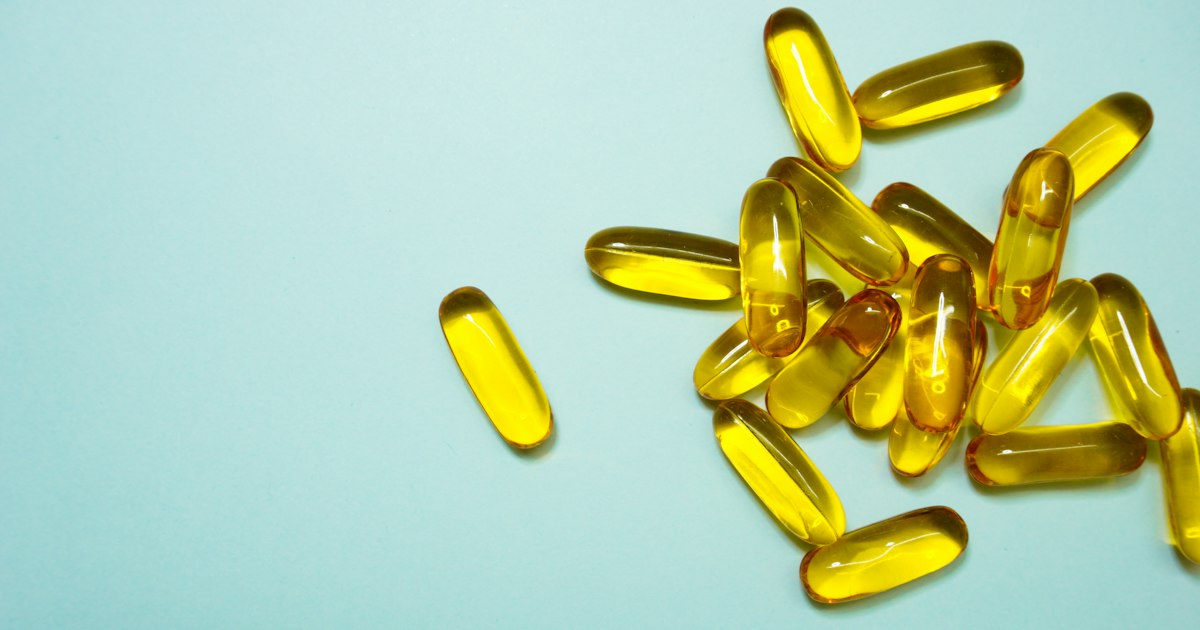
Fish oil also looks like a logical pairing. Omega-3 fatty acids are themselves a lipid carrier, and some manufacturers make combined Q10-plus-omega-3 capsules. Such products are convenient, though there is little direct evidence that the combination gives a clinical advantage over taking them separately.
The daily dose for an ordinary supplement (most often 100-200 mg) is reasonably split into two intakes with meals. Absorption has a limited capacity, so two 100 mg intakes usually give a better result than a single 200 mg one. Higher doses, used in clinical studies, require a doctor's consultation.
The antioxidant network: vitamin E and selenium
Ubiquinol, the reduced form of Q10, works in membranes together with vitamin E. When vitamin E neutralizes a free radical, it is itself oxidized, and ubiquinol is able to return it to the active state. This interaction is described in biochemical reviews and underlies the common "Q10 + vitamin E" combinations.
Selenium, in turn, is needed for the work of selenoproteins, in particular thioredoxin reductase, which participates in reducing ubiquinone to ubiquinol. In other words, selenium indirectly supports the "recharging" of the coenzyme itself.
The best-known clinical data on the combination come from the Swedish KiSel-10 study (Alehagen et al., 2013). Over four years, elderly people received 200 mg of Q10 and 200 µg of selenium per day, or placebo. The supplement group showed lower cardiovascular mortality. Importantly, the participants lived in a region with low soil selenium, so the results cannot be automatically transferred to people without selenium deficiency.
For vitamin E the situation is more cautious. Large studies of high-dose vitamin E did not confirm a preventive benefit, and an excess of selenium is toxic. Therefore the combination with vitamin E and selenium should be chosen in moderate doses, within dietary norms, and one should not layer several complexes containing the same micronutrients.
Mitochondrial combinations: carnitine, lipoic acid, creatine
In neurology and metabolic medicine there is the concept of a "mitochondrial cocktail" - a combination of Q10, L-carnitine, alpha-lipoic acid, creatine, and B vitamins for patients with mitochondrial diseases. The review by Tarnopolsky (2008) describes the biochemical rationale for this approach: each component supports a separate stage of energy metabolism.
For people with confirmed mitochondrial pathology, these combinations are prescribed by a doctor. But the sports market readily transfers the "cocktail" idea to healthy people. Here one should be realistic: in a trained person with normal nutrition, none of the components is limiting, and no synergy that could be felt has been demonstrated by studies.
The exception is creatine, which has its own strong evidence base for strength sports. It can be combined with Q10 without problems, but the effect will be provided by creatine, and Q10 is unlikely to add anything to the results. Likewise, L-carnitine and lipoic acid have their own indications, and their combination with Q10 should be evaluated separately rather than as a "package."
In the table we have summarized the most common combinations and the level of evidence for each.
| Combination | Rationale | Level of evidence |
|---|---|---|
| Q10 + fatty food | Required for absorption | High (pharmacokinetics) |
| Q10 + selenium | Support for Q10 regeneration | Moderate, in elderly people with low selenium status |
| Q10 + vitamin E | Mutual regeneration of antioxidants | Biochemical; clinical - limited |
| Q10 + omega-3 | Lipid carrier, cardiovascular goals | Limited for the combination |
| Q10 + L-carnitine, lipoic acid | Mitochondrial energy metabolism | Mainly in mitochondrial diseases |
| Q10 + creatine | Different mechanisms of energy supply | Creatine provides the effect; synergy not proven |
Q10 and medicines: statins and other drugs
Most often Q10 is "combined" with statins. Statins block the enzyme HMG-CoA reductase, on which the synthesis of both cholesterol and coenzyme Q10 depends. Because of this, plasma Q10 levels fall while on statins, which became the basis for the idea of compensating with a supplement.
Meta-analyses of Q10's effect on statin-associated muscle symptoms are contradictory: Banach and co-authors (2015) found no significant effect, while Qu and co-authors (2018) reported a reduction in pain. The combination itself is considered safe, so it can be discussed with a doctor, but a guaranteed result should not be expected.
With warfarin the situation is different. There are reports of a decrease in INR after starting Q10, although the controlled study by Engelsen and co-authors (2002) did not confirm this. The combination is possible only under a doctor's supervision and with monitoring of clotting parameters.
Caution is also needed with antihypertensive and glucose-lowering drugs, as well as during chemotherapy and radiotherapy. We provided a detailed list of restrictions in the article "Who Should Not Take Coenzyme Q10."
Undesirable and questionable combinations
Besides drug interactions, there are several practical situations where combining Q10 with other supplements or habits reduces the benefit or creates risks. The editorial team highlights the following:
- Several complexes at once.Q10 is often included in multivitamins and "heart" formulas; it is easy to unnoticeably exceed the norms for selenium or vitamin E.
- Mega-doses of antioxidants around workouts.The study by Ristow and co-authors (2009) showed that high doses of vitamins C and E can weaken part of the adaptations to training. For Q10 there is less such data, but it is reasonable not to turn the diet into an "antioxidant cocktail."
- Questionable "fat-burning" stacks.Q10 is sometimes added to mixtures with stimulants; the risks of such products are determined by the stimulants, not by the coenzyme.
- Taking it on an empty stomach with coffee.Not harmful, but absorption will be minimal.
The timing of intake deserves a separate mention. Some people report mild agitation or worsened sleep with an evening intake of Q10. If you notice this, move the dose to breakfast and lunch.
And finally, any new combination is better added gradually, one component at a time. This makes it easier to understand which supplement caused discomfort, should it appear, and whether each of them gives a noticeable effect.
Editorial conclusions
The most important combination for coenzyme Q10 is with fatty food: without it the supplement is poorly absorbed. Splitting the daily dose into two intakes further improves the result.
The combination with selenium has the most interesting clinical data, but mainly in elderly people with low selenium status. Vitamin E and omega-3 are biochemically logical partners with limited clinical evidence.
"Mitochondrial cocktails" make sense in mitochondrial diseases under a doctor's supervision, while in healthy athletes synergy is not proven. Statins can be combined; warfarin only under supervision.
We also recommend reading "Coenzyme Q10: Dosage Forms and Which to Choose," "Myths About Coenzyme Q10," and "Who Should Not Take Coenzyme Q10."
References
- Alehagen U, Johansson P, Björnstedt M, Rosén A, Dahlström U. Cardiovascular mortality and N-terminal-proBNP reduced after combined selenium and coenzyme Q10 supplementation: a 5-year prospective randomized double-blind placebo-controlled trial among elderly Swedish citizens. Int J Cardiol. 2013;167(5):1860–1866.
- Tarnopolsky MA. The mitochondrial cocktail: rationale for combined nutraceutical therapy in mitochondrial cytopathies. Adv Drug Deliv Rev. 2008;60(13–14):1561–1567.
- Bhagavan HN, Chopra RK. Coenzyme Q10: absorption, tissue uptake, metabolism and pharmacokinetics. Free Radic Res. 2006;40(5):445–453.
- Crane FL. Biochemical functions of coenzyme Q10. J Am Coll Nutr. 2001;20(6):591–598.
- Banach M, Serban C, Sahebkar A, et al. Effects of coenzyme Q10 on statin-induced myopathy: a meta-analysis of randomized controlled trials. Mayo Clin Proc. 2015;90(1):24–34.
- Qu H, Guo M, Chai H, et al. Effects of coenzyme Q10 on statin-induced myopathy: an updated meta-analysis of randomized controlled trials. J Am Heart Assoc. 2018;7(19):e009835.
- Engelsen J, Nielsen JD, Winther K. Effect of coenzyme Q10 and Ginkgo biloba on warfarin dosage in stable, long-term warfarin treated outpatients. Thromb Haemost. 2002;87(6):1075–1076.
- Ristow M, Zarse K, Oberbach A, et al. Antioxidants prevent health-promoting effects of physical exercise in humans. Proc Natl Acad Sci USA. 2009;106(21):8665–8670.
Andriy Melnyk
A strength-sports coach and author of programs for beginner and intermediate levels. Writes about training planning.